When choosing a UV Filter for a sunscreen formulation, its ability to absorb UV radiation is only one of the factors to consider. Even if a filter has good UV absorption, this does not necessarily mean that it can remain stable after prolonged exposure to light.
During use, sunscreen products are continuously exposed to sunlight. If the UV Filter gradually degrades under light exposure, its UV absorption ability and the protective performance of the overall formulation may also change. So, what determines the photostability of a UV Filter? And why is Avobenzone often used as a typical example when discussing photostability?
Why Do UV Filters Undergo Photodegradation?
The basic role of a UV Filter in sunscreen products is to absorb UV energy. In the case of organic UV Filters, the molecule enters a higher-energy excited state after absorbing UV radiation, and then needs to release this energy to return to a relatively stable state.
Ideally, this process does not change the chemical structure of the molecule.
However, not all UV Filters can handle the absorbed energy in the same stable way. If the excited molecule undergoes unfavorable chemical reactions, its molecular structure may change. With continued UV exposure, some filters may gradually undergo photodegradation, eventually affecting their effectiveness in the formulation.
Oxygen and other components in the formulation may also participate in this process. Different filters do not necessarily behave in exactly the same way in different formulation environments. Therefore, even if a UV Filter performs well as an individual raw material, its behavior may not be exactly the same after being incorporated into a complete sunscreen formulation.
Why Does Photostability Affect Sunscreen Formulations?
The reason is quite straightforward: sunscreen products need to maintain stable protective performance after exposure to sunlight. If a UV Filter undergoes significant degradation under light exposure, the UV absorption of the formulation may change. This is especially important for products that rely on specific UVA filters to provide broad-spectrum protection.
Different UV Filters may also interact with each other. Some combinations may help improve stability, some may have relatively little effect, while others may increase the risk of photodegradation. Therefore, sunscreen formulation is not simply a matter of putting several UV Filters together. From the perspective of UV Filter raw materials, factors such as purity, solubility, physical form, compatibility, and photostability may all affect the performance of the raw material in the final sunscreen product.
Avobenzone: Why Does Its Photostability Need Special Attention?
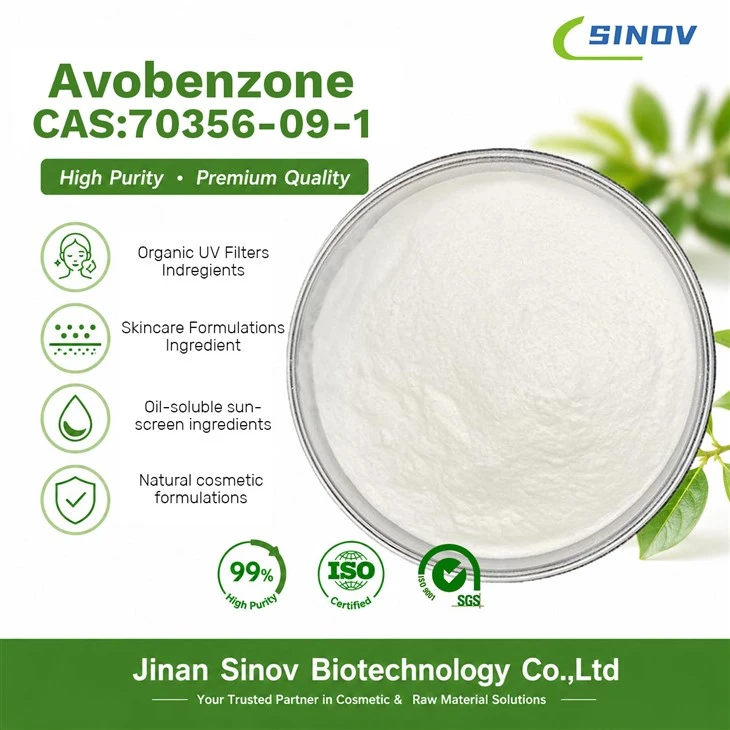
If one typical example is needed to explain the issue of photostability in sunscreen formulations, Avobenzone(CAS 70356-09-1) is a good choice.
Avobenzone is a commonly used UVA Filter that mainly covers the 320–400 nm UVA range. It has good UVA absorption and is therefore often used in broad-spectrum sunscreen formulations. At the same time, Avobenzone has relatively low photostability.
When Avobenzone absorbs UVA, the molecule enters an excited state. During this process, part of the energy may be released through unfavorable reaction pathways, causing changes to the molecular structure and resulting in photodegradation.
This is why sunscreen formulations containing Avobenzone usually also need to consider other UV Filters, stabilizers, antioxidants, and the oil phase system. Proper formulation design can help reduce Avobenzone photodegradation and maintain more stable UVA protection.
What Role Does Octocrylene Play in a Formulation?
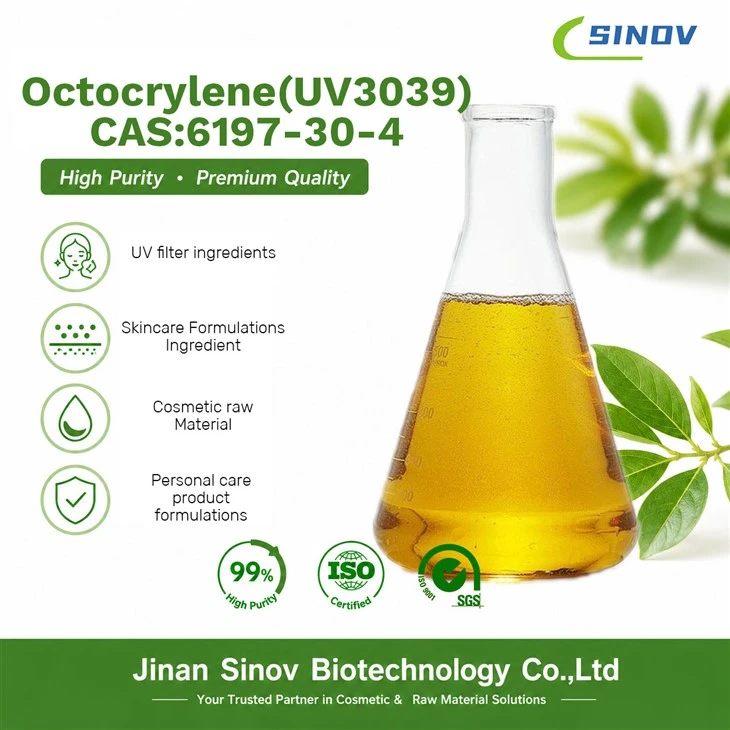
Octocrylene(CAS 6197-30-4) itself can absorb UV radiation, mainly covering UVB and some shorter-wavelength UVA. At the same time, Octocrylene has also been commonly used together with Avobenzone in traditional sunscreen formulations because it can help improve the photostability of Avobenzone.
In other words, the value of Octocrylene in a formulation is not simply to add another UV Filter. Its combination with Avobenzone reflects an important formulation concept: the role of different filters needs to be considered within the overall system. Of course, this does not mean that Octocrylene can be used as a universal stabilization solution for all sunscreen formulations. Its actual performance still depends on the overall formulation system, and the relevant regulations and requirements of the target market also need to be considered.

Why Does Bemotrizinol Have Good Photostability?
Compared with Avobenzone, Bemotrizinol has different characteristics in terms of photostability.
Bemotrizinol(CAS 187393-00-6) is a broad-spectrum organic UV Filter that can absorb both UVA and UVB. One of its notable characteristics is its good photostability. Under UV exposure, Bemotrizinol can effectively absorb UV energy and release the energy while maintaining a relatively stable molecular structure. As a result, it is less likely to undergo significant degradation than some less photostable filters. Bemotrizinol has therefore become one of the ingredients of interest in sunscreen formulations, especially for products that need to consider both broad-spectrum UV protection and formulation stability.
Can UV Filter Combinations Improve Overall Stability?
Yes, but the key is how they are combined.
A sunscreen product usually does not contain only one UV Filter because different filters cover different parts of the UV spectrum. At the same time, they may interact with each other and affect the photostability of the overall system. For example, depending on the formulation requirements, the following can be considered:
| UV Filter / Ingredient | Main Role |
|---|---|
| Avobenzone | Mainly used for UVA protection |
| Octocrylene | Provides UV absorption and can help improve the stability of Avobenzone |
| Bemotrizinol | Provides broad-spectrum UVA/UVB protection and has good photostability |
| Ethylhexyl Triazone | Has strong UVB absorption |
| Other compatible UV Filters or supporting ingredients | - |
But there is one point that is easy to overlook: more UV Filters do not necessarily mean better results.
The filters need to be combined appropriately, taking into account UV coverage, solubility, formulation stability, product feel, and the regulatory requirements of the target market.
How Is the Photostability of UV Filters Evaluated?
The stability of a UV Filter or a complete sunscreen formulation is usually evaluated through controlled light exposure tests.
During testing, the sample is exposed to a certain intensity of light for a specific period of time, and the changes before and after light exposure are then observed. For example, the UV absorption curve, filter content, and degradation products can be analyzed. Analytical methods such as HPLC and UV-Vis can also be used in related studies.
This is important because the results of testing a UV Filter raw material alone cannot fully represent its performance after it is incorporated into the final formulation.
Conclusion
The photostability of a UV Filter is not simply about whether it can absorb UV. More importantly, after absorbing UV energy, the filter needs to maintain its structure and performance rather than undergoing rapid photodegradation.
A suitable UV Filter should not be evaluated only by its UV absorption ability. It is also important to consider whether it can perform stably when incorporated into the overall sunscreen formulation.
If you have any ordering requirements, please feel free to contact us: sinov@pharmachemm.com
References and Supporting Sources
[1] Grand Ingredients. IUV Filter Degradation: Photostability Chemistry. Grand Ingredients.
[2] Eurofins. (2026). The Chemistry of Photostability: Why Your Sunscreen Formulation Might Be Degrading. Eurofins.