Key Ingredients in Sleep Support Formulations
Sleep quality can be influenced by various factors, including sleep schedules, psychological stress, lifestyle habits, and overall health. Improving sleep involves more than simply falling asleep more easily; it also includes maintaining a regular sleep-wake rhythm and achieving more restorative rest. This makes sleep support products a relevant area for product development.
Melatonin, gamma-aminobutyric acid (GABA), hops extract, 5-hydroxytryptophan (5-HTP), and certain vitamins frequently appear in sleep- and nutrition-related research and product discussions. However, these ingredients participate in different physiological processes, and the strength of the available evidence varies. Understanding these differences can help brands define formulation strategies more effectively and make informed raw material selections.
1. Melatonin: A Signal Regulating the Sleep-Wake Cycle
Melatonin is a hormone naturally produced by the human body, primarily by the pineal gland in the brain. Its production is regulated by light information received by the retina and by the body's internal clock. Melatonin secretion generally increases in dim light, while nighttime light exposure, particularly bright light at certain wavelengths, may suppress this process.
Melatonin does not simply induce sleep; it provides the body with a timing signal associated with the biological night. By acting on melatonin receptors, it participates in regulating the circadian system and helps coordinate sleep timing with the body's internal clock. Research on melatonin supplements therefore focuses particularly on jet lag, sleep timing, and certain circadian rhythm-related issues.
For formulation development, timing of use may be as important as dosage. Taking melatonin at different times may have different effects on the body clock, and its actual effects also depend on individual differences and the specific sleep problem. It should therefore not be described as a universal sleep aid suitable for all cases of insomnia.
2. GABA: An Inhibitory Neurotransmitter That Helps Regulate Neuronal Excitability
Gamma-aminobutyric acid (GABA) is one of the primary inhibitory neurotransmitters in the mammalian central nervous system. Neurons communicate through electrical and chemical signals, and GABA can bind to specific receptors to regulate neuronal electrical activity. For example, activation of GABA(_A) receptors generally increases the cell membrane's permeability to chloride ions, making it more difficult for neurons to reach the threshold required to trigger electrical signals and thereby reducing neuronal excitability.
This inhibitory regulation helps maintain a balance in nervous system activity and also contributes to the regulation of neural networks involved in sleep. However, the physiological mechanisms of GABA in the human body do not directly demonstrate that oral GABA supplements produce the same effects. The extent to which orally consumed GABA affects the central nervous system remains a subject of scientific debate, and human study results are also influenced by factors such as study size, dosage, and design.
GABA may therefore be a worthwhile ingredient to investigate in sleep support formulations. However, its practical value should be assessed based on human evidence involving oral supplementation, rather than solely on its physiological role as a neurotransmitter.

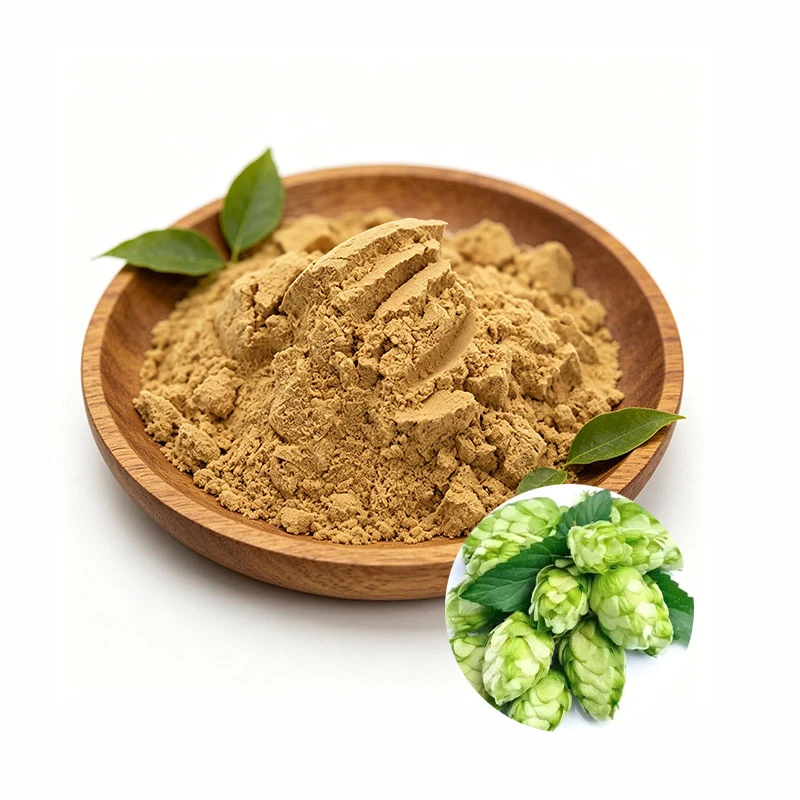
3. Hops Extract: From Plant Compounds to Sleep-Related Research
Hops (Humulus lupulus) is a traditional brewing plant. Its female flower cones contain various natural compounds, including bitter acids such as humulone and lupulone, as well as flavonoids. Different extraction processes affect the concentrations of these compounds in the resulting extract, meaning that hops extracts are not necessarily compositionally identical.
Interest in hops for sleep-related products stems partly from its traditional use and partly from the potential biological activities of certain plant compounds. Experimental studies have investigated the effects of some of these compounds on pathways related to the nervous system, while other research has examined sleep-related outcomes associated with combinations of hops and botanical ingredients such as valerian. For raw material sourcing and product development, botanical origin, plant part, extraction solvent, extraction ratio, and marker compound content are all important parameters. Clearly defined specifications make it easier to compare products from different suppliers and assess their suitability for specific formulations.
4. 5-HTP: A Key Precursor in the Serotonin Synthesis Pathway
5-Hydroxytryptophan (5-HTP) is an intermediate in the body's synthesis of serotonin, also known as 5-HT. Under normal physiological conditions, the body first converts the essential amino acid tryptophan into 5-HTP, which is then converted into serotonin by aromatic L-amino acid decarboxylase. Serotonin participates in mood regulation, appetite control, and various neurophysiological processes, and it is connected to sleep-wake regulation through complex neural networks.
This biochemical pathway helps explain why 5-HTP has attracted interest in research related to mood and sleep. However, increasing the availability of a serotonin precursor does not necessarily improve sleep. Serotonin can have different effects depending on the brain region and receptor subtype involved, while sleep outcomes are also influenced by other neurotransmitters, circadian rhythms, and individual physiological conditions. The clinical evidence for 5-HTP in sleep-related applications should therefore be interpreted cautiously.
Safety is another important consideration when evaluating this ingredient. Combining 5-HTP with certain medications that increase serotonin activity may raise the risk of serotonin syndrome. Formulation development and product labeling should therefore account for potential drug interactions, intended user groups, and the regulations of the target market.
Vitamin B6: A Nutritional Cofactor Involved in Neurotransmitter Synthesis
Vitamin B6 refers to a group of compounds with related biological activities. One of its important active forms in the human body is pyridoxal 5'-phosphate (PLP). As a cofactor for numerous enzymes, PLP participates in processes such as amino acid metabolism and neurotransmitter synthesis.
One example relevant to the nervous system is GABA production: glutamate decarboxylase requires PLP to convert glutamate into GABA. Vitamin B6 also participates in other neurotransmitter synthesis pathways. Adequate vitamin B6 status is therefore important for normal nervous system function
Comparing the Characteristics of Six Ingredients
These ingredients participate in different physiological processes. The table below can serve as a reference for preliminary ingredient selection and formulation planning rather than as a ranking of product efficacy.
|
Ingredient |
Main Research or Physiological Association |
|
Melatonin |
Sleep-wake cycle and circadian rhythm |
|
GABA |
Inhibitory signaling in the nervous system |
|
Hops Extract |
Plant compounds and sleep-related research |
|
5-HTP |
Serotonin synthesis pathway |
|
Vitamin B6 |
Normal nervous system function and nutrient metabolism |
What Should B2B Buyers Check When Sourcing Sleep Support Ingredients?
Confirm Ingredient Identity and Specifications
Before purchasing, buyers should confirm the exact ingredient name, chemical form, and applicable specifications. For melatonin, GABA, and 5-HTP, this includes verifying chemical identity, CAS numbers, assay, and applicable impurity limits.
The specific form of vitamin B6 should be clearly defined, such as pyridoxine hydrochloride or pyridoxal 5'-phosphate (P-5-P). For hops extract, buyers should also confirm the botanical source, plant part, extraction method, and marker compound requirements.
Review COA and Analytical Data
Whether purchasing samples or placing bulk orders, buyers should request a batch-specific Certificate of Analysis (COA) and confirm that the results meet the agreed specifications. For melatonin, GABA, and 5-HTP, particular attention should be paid to assay and relevant impurity data. Analytical methods and acceptance criteria should match the ingredient type, rather than relying on a single purity figure to assess raw material quality.
|
Compound |
CAS Number |
|
Melatonin |
73-31-4 |
|
GABA |
56-12-2 |
|
Hops Extract |
- |
|
5-HTP |
314062-44-7 |
Select Raw Materials Based on the Intended Dosage Form
Ingredient suitability also depends on the final dosage form, such as capsules, tablets, powders, gummies, or liquid products. Buyers should consider formulation requirements and confirm solubility, physical form, stability, and compatibility with other ingredients. For example, vitamin D3 is a fat-soluble vitamin, so its raw material form can influence formulation design. The color, odor, and bitterness of hops extract may also affect the sensory characteristics of the finished product. For new formulations or customized projects, sample testing is recommended before finalizing bulk purchasing specifications.
If you are looking for high-quality powder ingredients, welcome to contact us: sinov@pharmachemm.com
FAQ
1.What Are the Main Ingredients in Sleep Support Supplements?
Common ingredients include melatonin, GABA, 5-HTP, hops extract, vitamin B6, and vitamins.
2. What Is the Difference Between Melatonin and GABA?
Melatonin helps regulate the sleep-wake cycle, while GABA is an inhibitory neurotransmitter that helps regulate neuronal activity.
3. How Does 5-HTP Relate to Sleep?
5-HTP is a precursor to serotonin, a neurotransmitter involved in mood regulation and sleep-related processes.
References and Supporting Sources
[1] Yeom JW, Cho CH. (2024). Herbal and Natural Supplements for Improving Sleep: A Literature Review. Psychiatry Investig.
[2] Comai S, Gobbi G. (2024). Melatonin, Melatonin Receptors and Sleep: Moving Beyond Traditional Views. J Pineal Res.
[3] Maffei ME.(2020). 5-Hydroxytryptophan (5-HTP): Natural Occurrence, Analysis, Biosynthesis, Biotechnology, Physiology and Toxicology. Int J Mol Sci.