
Sleep timing is closely connected to the body's circadian rhythm. When daily routines change, or when a person's sleep schedule no longer matches their usual daily rhythm, falling asleep can become more difficult. Melatonin(CAS 73-31-4) is a hormone closely involved in this process.
Melatonin is mainly produced by the pineal gland in the brain, and its secretion is affected by light and darkness. Under normal conditions, melatonin levels rise at night, sending the body a signal that nighttime has arrived and helping regulate the sleep-wake cycle. Today, melatonin is also widely used in sleep-related dietary supplements.
What Is Melatonin?
Melatonin is a hormone naturally produced in the human body and is involved in the body's circadian rhythm. The body typically increases melatonin production after dark, while melatonin levels gradually decrease as morning light increases. Simply put, melatonin acts more like an internal "time signal" than a traditional sedative. It sends the body a nighttime signal, helping the body gradually enter a state suitable for rest.
In addition to the melatonin naturally produced by the body, melatonin raw materials are also available for dietary supplement production. Melatonin powder is commonly used as a raw material and can be further developed into different product formats, including capsules, tablets and gummies.
How Does Melatonin Work?
Melatonin works in connection with the body's natural circadian rhythm. As the surrounding light gradually becomes darker, the pineal gland begins to increase melatonin production. Melatonin then sends the body a signal associated with nighttime, helping the body gradually prepare for sleep. In the morning, as light increases, melatonin production in the body gradually decreases, and the body transitions from a nighttime state to a daytime state.
This is why melatonin for sleep is commonly used in products related to sleep timing and sleep support. It is closely connected to when the body enters a sleep state.
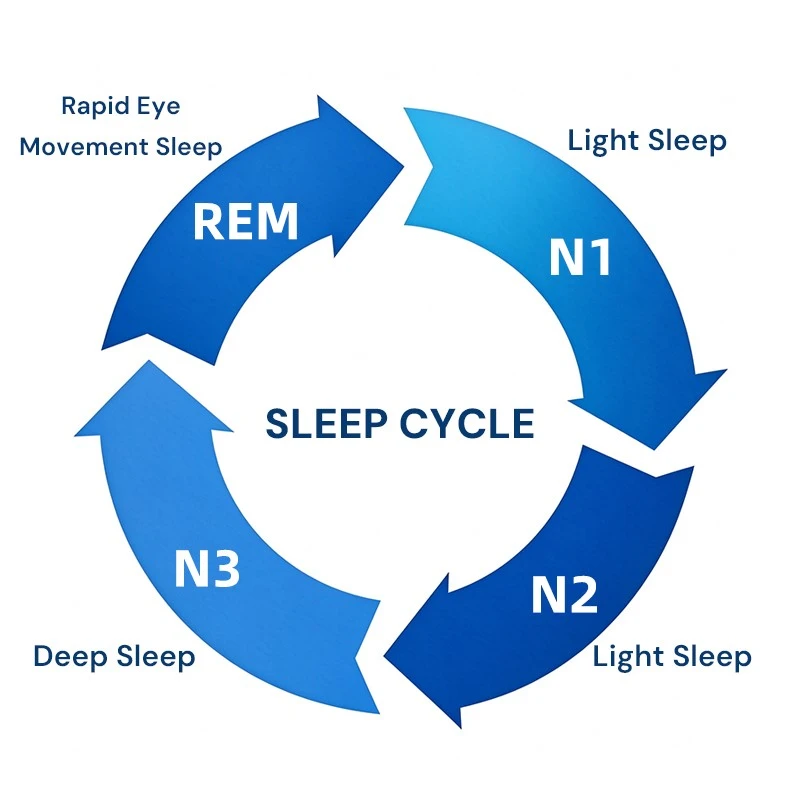
What Are the Benefits of Melatonin?
Helping Shorten the Time It Takes to Fall Asleep
One of the most common applications of melatonin is sleep. As light decreases at night, the body normally increases melatonin production, sending a signal that it is entering the nighttime state. After melatonin supplementation, it may help some people shorten the time needed to fall asleep.
Melatonin does not work in the same way as traditional sleeping pills. It is more involved in the body's natural sleep-wake rhythm rather than directly inducing sleep through a sedative effect.
Helping Adjust Sleep Rhythms
The body's circadian rhythm can be affected by light exposure, sleep schedules and lifestyle habits. For example, traveling across time zones, working night shifts or maintaining an irregular schedule for a long period may cause sleep timing to shift away from its usual pattern. Taking melatonin at an appropriate time can provide the body with a signal similar to the nighttime signal, helping adjust when sleep occurs.
Applications of Melatonin in Sleep Products
From a product development perspective, melatonin has a relatively clear application in sleep-related products. Melatonin supplements are currently available in various formats, including capsules, tablets and gummies. Among these, gummies are one of the more popular formats, offering a pleasant taste and making them easier to incorporate into daily routines. Tablets are also a common choice, with clearly defined serving sizes and convenient production and storage characteristics. For businesses, developing a melatonin product involves more than sourcing the raw material. It also requires consideration of raw material specifications, serving size, dosage form, formulation stability, packaging and regulations in the target market.


Whether in capsule, tablet or gummy form, melatonin powder can serve as a basic raw material for product development. When sourcing it, businesses should consider not only purity and price, but also quality documentation, supply capacity and the production requirements of the final product.
If you have any ordering requirements, please feel free to contact us sinov@pharmachemm.com
FAQ
1.How Long Does Melatonin Take to Work?
Melatonin generally starts to take effect within 20 to 40 minutes, although the timing can vary depending on the individual and the product format. Experts notes that melatonin is commonly taken around 30 minutes before bedtime. Some extended-release products may be taken 1 to 2 hours before bedtime, so the recommended timing can differ depending on the formulation.
2.Do you provide OEM/ODM melatonin customization services?
Yes. OEM/ODM services can be provided for melatonin products in different formats, including gummies, tablets and capsules. Customization can cover formula development, dosage form, flavor, packaging and other product specifications based on the customer's requirements.
4.Are you a melatonin manufacturer?
Yes. We supply melatonin raw materials and support melatonin supplement production for B2B customers. Customers can contact us to discuss raw material specifications, product formats and customized production requirements.
5.Can you provide melatonin samples?
Yes. Samples can be provided for customers who need to evaluate the melatonin raw material or test a proposed formulation before placing a bulk order.
6.Can you provide testing certificates and quality documents?
Yes. Relevant quality documents can be provided according to the product and order requirements, such as a COA (Certificate of Analysis) and other available testing or technical documents.
References and Supporting Sources
[1] Cultivating Health. (2025). Melatonin and your sleep: Is it safe, what are the side effects and how does it work? Cultivating Health.
[2] Artigas L, Coma M, Matos-Filipe P, Aguirre-Plans J, Farrés J, Valls R, Fernandez-Fuentes N, de la Haba-Rodriguez J, Olvera A, Barbera J, Morales R, Oliva B, Mas JM. (2020). In-silico drug repurposing study predicts the combination of pirfenidone and melatonin as a promising candidate therapy to reduce SARS-CoV-2 infection progression and respiratory distress caused by cytokine storm. PLoS One.
[3] Qaseem A, Kansagara D, Forciea MA, Cooke M, Denberg TD; Clinical Guidelines Committee of the American College of Physicians.(2016). Management of Chronic Insomnia Disorder in Adults: A Clinical Practice Guideline From the American College of Physicians. Ann Intern Med.
Disclaimer:
The information on this website is for communication and learning purposes only and is not medical advice. It should not be used for diagnosing or treating any illness.