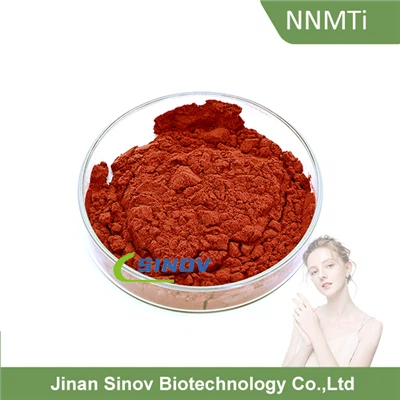
Searches for "PDRN in skincare" are on the rise across major websites. These DNA fragments, extracted from deep-sea fish such as salmon, are appearing as advanced cosmetic ingredients in an increasing number of premium skincare products. So what exactly is this ingredient?
What Is PDRN?
PDRN stands for Polydeoxyribonucleotide. Its raw materials can be sourced from different origins and produced at different quality grades.
PDRN Cosmetic Ingredient Sources
Salmon-derived PDRN, commonly referred to as salmon DNA
Plant-based PDRN
Microbial fermentation-derived PDRN
Biosynthetic PDRN

Characteristics of PDRN Skincare Ingredients
PDRN has a relatively high molecular weight, which may limit its ability to penetrate the skin.
Excellent biocompatibility
Water-soluble properties
Applications of PDRN in Cosmetics
Cosmetic-grade PDRN powder can be used in the formulation of a wide range of skincare products, including:
Serums
Sheet masks
Repair and recovery creams
Other skincare formulations designed for skin conditioning and care
Why Is PDRN Becoming Popular in Skincare?
According to the data from Horizon Databook, the global PDRN market size has reached 15.57 billion US dollars in 2024. The raw materials in the cosmetics field are constantly being updated and replaced. PDRN raw materials can become a popular cosmetic ingredient in the market in 2026.
The emergence of popular topics such as PDRN Korean skincare, PDRN anti-aging skincare, etc., also indicates an increase in the global beauty market's demand for PDRN raw material components. Especially in the Korean skincare market, its rapid rise is a sign of the growing demand for PDRN raw material components.
The multi-functionality of PDRN makes it compatible with various components in the formula, and it is expected to become an advanced skincare ingredient. Therefore, for cosmetic formulae and cosmetic companies, the appearance of this emerging component may also become a new star of raw materials in the skincare field.
Common Applications of PDRN in Cosmetic Formulations
As an ingredient used in premium skincare products, PDRN is increasingly incorporated into various cosmetic formulations. Whether derived from roses or salmon DNA, PDRN is currently used by many skincare brands in products such as eye creams, ampoules, serums, and other high-performance skincare solutions.
PDRN in Eye Creams
The development of PDRN cosmetic formulations has led to the introduction of numerous premium-positioned eye creams featuring PDRN as a key ingredient.
According to information published in Mintel's Global New Products Database (GNPD) and Mintel's Beauty and Personal Care Innovation Report (February 2026), some cosmetic manufacturers have successfully addressed challenges associated with PDRN's molecular size and skin penetration. As a result, PDRN-based eye creams have been introduced to the market as part of advanced skincare solutions.
In addition, Acetyl Hexapeptide-8 has become a widely used ingredient in eye cream formulations due to its lightweight texture and fast absorption properties, making it a popular complementary ingredient in premium eye care products.
PDRN in Ampoules
PDRN extracted from salmon DNA is widely used in ampoule formulations. These products are often combined with other high-performance skincare ingredients, including:
High-quality Madecassoside
Other moisturizing and skin-conditioning ingredients
The combination of PDRN with these ingredients helps formulators create multifunctional ampoule products designed to support hydration, skin conditioning, and overall skincare performance.

Formulation Considerations for PDRN
PDRN formulations offer a wide range of possibilities for cosmetic applications. Cosmetic-grade PDRN is typically derived from salmon milt or produced through bacterial fermentation.
Recommended Formulation Parameters
pH Range: 6.0–8.0
Viscosity Effect: Neutral
Ingredient Compatibility: PDRN can be formulated with ingredients such as nonionic surfactants, hyaluronic acid, peptides, humectants, and other commonly used skincare ingredients. It is generally recommended to avoid combining PDRN with strong acids or strong cationic polymers, as these may affect formulation stability.
PDRN vs Other Popular Skincare Ingredients
PDRN vs Hyaluronic Acid
Comparison of Mechanisms of Action
Hyaluronic Acid is a highly hydrophilic substance capable of holding up to 1,000 times its weight in water. It naturally occurs in the skin and connective tissues and plays an important role in maintaining skin hydration, elasticity, and moisture balance.
PDRN works through a different mechanism. It is believed to interact with A2A receptors, which may support tissue regeneration and skin recovery processes.
Comparison of Primary Benefits
Hyaluronic Acid
Primarily functions as a moisturizing ingredient
Helps increase and maintain skin water content
Supports skin hydration and plumpness
PDRN
Primarily associated with supporting collagen production
May help promote cellular repair processes
Commonly used in advanced skincare formulations focused on skin revitalization
PDRN vs Peptides
As discussed above, PDRN and peptides have different structures and mechanisms of action, allowing them to be used together in cosmetic formulations without interfering with one another.
Differences in Chemical Properties
Cosmetic Peptides include various categories such as signal peptides and carrier peptides. They are short chains composed of amino acids. Common beauty peptides include Palmitoyl Pentapeptide-4 and GHK-Cu peptide.
PDRN, on the other hand, is not a peptide. It is fundamentally a DNA fragment composed of nucleotide chains, giving it a completely different molecular structure from peptides.
Stability and Skin Penetration
PDRN exhibits relatively stable chemical properties. Studies have indicated that certain PDRN fragments may be capable of penetrating the skin barrier, particularly smaller fragments within the 50–200 kDa molecular weight range.
Most peptides are hydrophilic molecules and generally face greater challenges in penetrating the skin barrier.
How to Choose a Reliable PDRN Raw Material Supplier?
PDRN quality testing, COA documents, and manufacturer qualifications are key criteria for evaluating a PDRN raw material supplier. As a PDRN powder supplier, it is essential to provide B2B buyers with the following product information:
1. Provide COA and other documentation; the raw material quality standards must include test items such as appearance, odor, loss on drying, heavy metal content, and light transmittance.
2. Specify the source of the PDRN raw material.
3. Clearly state the molecular weight of PDRN.
A PDRN raw material manufacturer typically also supplies PN raw materials and other natural active ingredients.
Future Trends of PDRN in the Beauty Industry
The PDRN skincare trend may be influenced by the Korean beauty market, which has a significant impact. As a biotech cosmetic ingredient, PDRN meets the demand for premium formulations, and B2B manufacturers and cosmetic distributors purchasing this high-end raw material are likely to increase. Cosmetic raw materials are currently attracting global attention, with rising procurement volumes of hyaluronic acid powder, collagen raw powder, and other cosmetic ingredients.
Conclusion
Whether purchasing PDRN ingredients or other cosmetic components, it is essential to comply with local laws.
FAQ
What does PDRN stand for in skincare?
PDRN, as a raw material for high-end skin care products, is used in skin care products.
Is PDRN salmon sperm?
The PDRN derived from animal sources is extracted from Salmon.
How should PDRN raw material be stored?
Avoid direct exposure. It is best to store it in a sealed and dark environment, and maintain strict temperature control.
Is PDRN commonly used in serums?
PDRN can be used as a raw material.
What types of cosmetic products use PDRN?
Facial skin care products, such as serums, masks, etc.
What is cosmetic grade PDRN?
Cosmetic-grade PDRN and PN are usually used in the cosmetics industry, while injectable-grade PDRN is typically used in clinical settings.
Hot Cosmetic Raw Matetial

Rose PDRN

Salmon Sperm DNA PDRN

PN Raw Material

GHK-CU

Hyaluronic Acid

AHK-CU
References:
Mintel – Beauty & Personal Care Innovative Products (February 2026)
INCIDecoder – Yurslf PDRN Ampoule
PDRN Care – PDRN vs Peptides: How Do They Compare for Anti-Aging?
PDRN Care – PDRN vs Hyaluronic Acid: Regeneration Meets Hydration
Disclaimer:
The information on this website is for communication and learning purposes only and is not medical advice. It should not be used for diagnosing or treating any illness.